





Senior leaders in Singapore’s corporate environment face a stress profile that is qualitatively different from the general professional population.
It is not simply higher volume stress. It is a specific combination of sustained decision-making pressure, social visibility, accountability without full control, the isolation of leadership and the difficulty of switching off from an always-on professional identity.
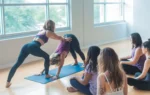
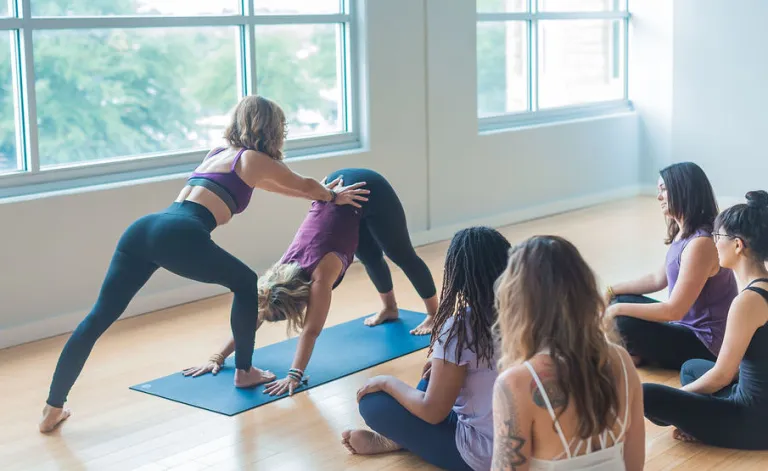
Generic wellness interventions do not address this profile specifically. A lunchtime group yoga class helps. But it delivers the same session to the C-suite executive that it delivers to the junior analyst sitting three mats away.
Private yoga classes Singapore for executive practitioners is a different proposition. It starts where that leader actually is physiologically and designs around what they actually need.
Why Executives Need Different Yoga Programming
The physiological profile of Singapore’s senior leaders reflects their specific occupational demands in ways that standard yoga programming was not designed to address.
Sustained high-level decision-making maintains the prefrontal cortex in a state of continuous high-demand engagement that depletes the neurotransmitter resources supporting focus, emotional regulation and impulse control across a working day. By the time a senior executive attends an evening group yoga class, their prefrontal cortex is genuinely fatigued in a neurochemical sense. The attentional demands of following a teacher’s complex sequence cuing in that state are counterproductive rather than restorative.
The social dynamics of group classes create a second issue for senior practitioners. The performance culture that group yoga can inadvertently reinforce, the subtle competitive awareness of what practitioners on adjacent mats are doing, activates exactly the social comparison and achievement orientation that executive stress management needs to switch off. A practitioner who is mentally comparing their flexibility to a colleague’s during savasana has not achieved the psychological disengagement that the session is supposed to deliver.
Private sessions remove both problems simultaneously. The programme can be designed for genuine cognitive rest rather than complex sequencing demands. The environment eliminates social comparison entirely.
The Autonomic Profile That High-Performance Coaching Targets
The most sophisticated stress management practitioners working with Singapore’s senior leaders approach the autonomic nervous system as the primary intervention target rather than the subjective experience of stress.
Heart rate variability is the most actionable autonomic metric. In the executive population, chronically low HRV reflects the sustained sympathetic dominance that high-stakes professional environments maintain and that represents the physiological mechanism through which chronic executive stress converts to cardiovascular risk, cognitive performance degradation and the decision-making impairments that have measurable organisational consequences.
Private yoga programmes designed specifically for HRV improvement are structured differently from standard yoga classes. They prioritise:
- Extended pranayama work at the beginning of the session rather than at the end, when the autonomic effect is needed most and when the practitioner’s system is most receptive after the transition from work context
- Slow, supported posture holds that minimise the sympathetic activation of effort while maximising the parasympathetic signal of physical safety and stillness
- Specific breathwork protocols designed around the individual’s current HRV baseline and respiratory capacity rather than standardised breath counts
- Savasana of sufficient duration to consolidate the autonomic shift rather than being compressed to a few minutes at the end of an activity-heavy session
The teacher in this model is not primarily a yoga instructor. They are a regulated nervous system guide using yoga’s tools with clinical precision.
Session Design Around the Executive Schedule
Private yoga for senior practitioners in Singapore must also accommodate the specific scheduling realities of the executive context.
Sessions at conventional yoga studio times do not work for many senior leaders whose calendars are managed externally and who have limited discretionary scheduling control. The most effective private yoga programmes for this population are designed to be delivered at the practitioner’s office, at their home or within a studio’s schedule with genuine flexibility rather than fixed weekly slots.
Session duration flexibility is equally important. A senior leader who can consistently commit to 40-minute sessions three times per week will accumulate greater autonomic benefits than one who commits to 90-minute sessions once per week and delivers the commitment inconsistently because the time block is impossible to protect reliably.
Private teachers who understand this scheduling reality and who design genuinely adaptable programme structures, including specific shorter session protocols for high-demand weeks alongside fuller sessions when the calendar permits, are serving the executive population in the way that their specific constraints require.
The most effective executive private yoga programmes also include a home practice component, a specifically designed short daily routine that the practitioner can complete independently between sessions and that maintains the autonomic progress developed during supervised sessions rather than allowing it to deteriorate between appointments.
Yoga Edition has developed its one-to-one programming with genuine awareness of the executive practitioner’s specific physiological profile and scheduling reality, creating sessions that deliver meaningful autonomic outcomes within the practical constraints that senior professional life imposes.